
Childhood apraxia of speech
Childhood Apraxia of Speech (CAS) Therapy
Childhood apraxia of speech is a motor speech disorder: a child knows what they want to say, but their brain has trouble planning and coordinating the movements needed to say it. With the right kind of therapy, practiced often, children with apraxia can make meaningful progress. Fisher-Jost Therapy provides apraxia therapy for children in Frankfort, Mokena, Manteno and nearby.
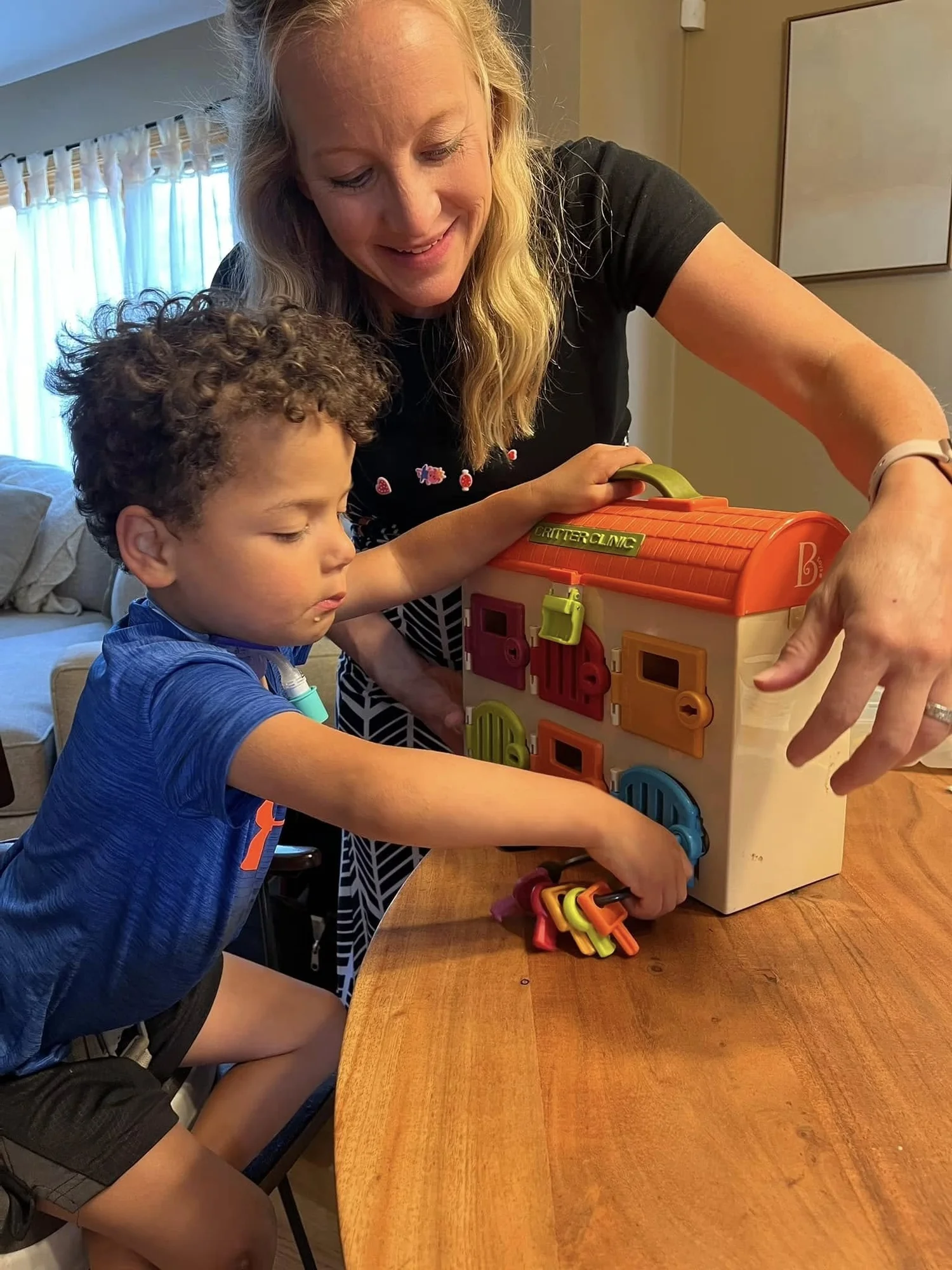
What is childhood apraxia of speech?
CAS isn't caused by weak muscles. It's a problem with planning speech movements. That's why a child with apraxia may say a word clearly once and then struggle to say it again. It's different from a typical speech delay and needs a specific kind of therapy.
What to watch for
Signs of apraxia
These are some signs (source: ASHA). Only a speech-language pathologist can diagnose CAS.
- Errors that change each time the child says the same word
- Trouble moving smoothly from one sound or syllable to the next
- Visible effort or “groping” with the lips, jaw or tongue to find a sound
- Speech that sounds choppy, or has unusual stress or rhythm
- Understanding much more than they can say
- A very limited number of sounds, or few words, in a toddler
Apraxia or a speech delay?
Children with a typical speech delay usually make the same errors consistently and improve steadily with practice. Children with apraxia are often inconsistent, have more trouble with longer words, and progress more slowly without intensive, motor-based therapy. An evaluation will tell you which is going on.
How we treat apraxia
Apraxia therapy works best with frequent, focused practice. Your therapist will:
- Practice a small set of meaningful words and phrases many times per session
- Use visual, touch and rhythm cues to help your child plan movements
- Build from simple to more complex sound combinations
- Give you short, daily practice activities for home
- Introduce AAC when it helps your child communicate while speech develops
Our team is trained in two approaches designed for childhood apraxia of speech: Dynamic Temporal and Tactile Cueing (DTTC) and the Kaufman Speech to Language Protocol (K-SLP).
-
Children with CAS usually do best with more frequent sessions than children with typical speech delays. Your therapist will recommend a schedule after the evaluation.
-
Apraxia doesn't usually resolve on its own, but with the right therapy most children make significant progress.
-
Yes. AAC can reduce frustration and support language while your child keeps working on speech.
-
No. We grow our team as needed so families can start without waiting.
Apraxia FAQs
Related: Articulation therapy · Autism & AAC · Evaluations
Ready to talk about your child?
Book a free screening. We'll listen, answer your questions, and help you decide on next steps.